In stone fabrication, every minute matters. Time spent measuring, setting up cuts, repositioning material, or correcting mistakes can quickly add up, especially when your shop is handling multiple projects at once.
Automated bridge saws are designed to take much of that manual work out of the cutting process. By automating key steps and improving consistency, these machines can help fabricators increase production, reduce waste, and get more done with the same workforce.
But there is an important distinction to understand: not every automated bridge saw is a CNC bridge saw. While the terms are sometimes used interchangeably, they describe different levels of machine control and automation.
The Basics: Automated Bridge Saw vs. CNC Bridge Saw
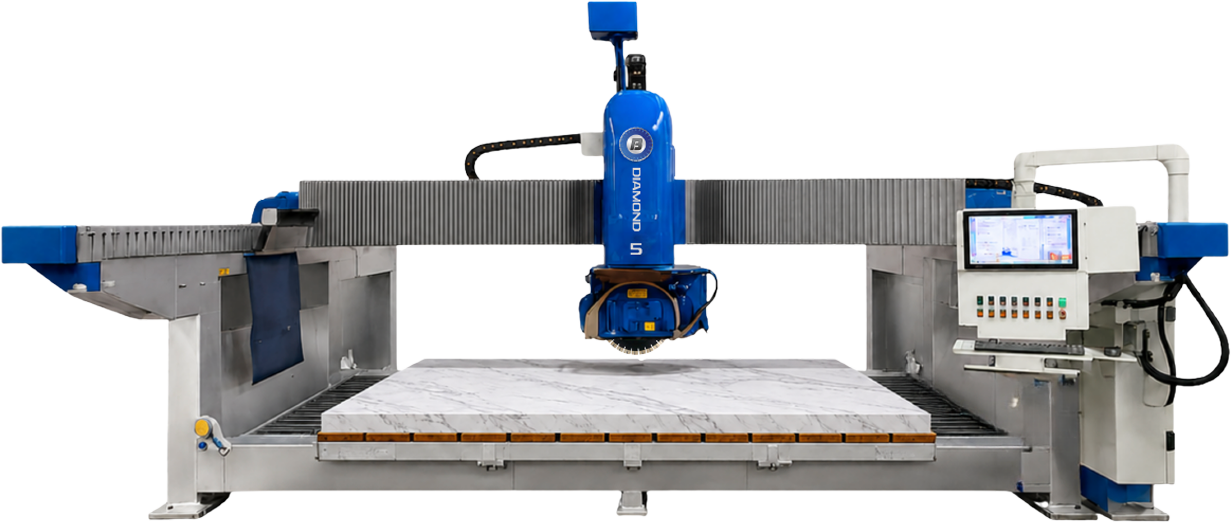
A bridge saw uses a bridge-mounted blade to make precise cuts through materials such as granite, marble, quartz, porcelain, and other stone products. The difference between machines comes down largely to how much of the cutting process is controlled by the operator versus the machine.
An automated bridge saw uses automated controls to reduce manual steps in the cutting process. Depending on the machine, automation may control functions such as blade movement, positioning, cutting speed, or other aspects of operation.
A CNC bridge saw takes automation further by using computer numerical control (CNC) technology. The operator can program specific cutting movements and dimensions, allowing the machine to follow a predetermined cutting path with a high degree of repeatability.
In other words, CNC bridge saws are automated, but not every automated bridge saw is necessarily CNC. The right choice depends on your shop's production needs, the types of projects you take on, and the level of automation you need.